
The discussions between the authors revolved around the necessity of “green buildings” to tackle the energy crisis and the global move towards sustainability. “Greening” the building envelope, such as green roofs, green walls, and efficient heat management, could significantly
reduce energy demand for air conditioning (40-60%) and cool the surrounding streets by 0.03°C to 3°C. Further, green roofs could also manage water effectively, potentially retaining
up to 70% of stormwater runoff.
The authors further stated that while the installation and maintenance of green systems may
seem expensive initially, the life-cycle would cost over 40 years and was comparable to traditional “black” roofs. The initial cost was just 0.4% of the total construction cost for multi – storey residential buildings.
Following the above, some critical and legal considerations were developed, such as follows:
- The national legislation needed to be aligned with the evolving European standards (L.4067/2012, Forest Legislation, Urban Parks Legislation, Local Urban Plans, and Special Urban Plans);
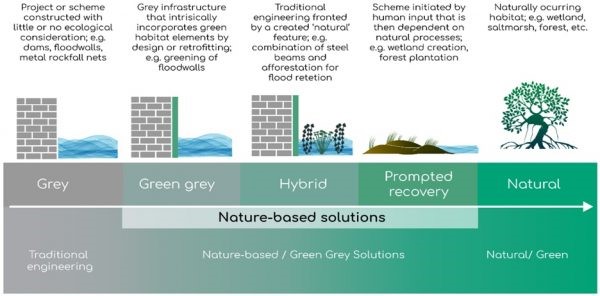
- Specifications for parks, forests, and public spaces should be revised to incorporate Nature-based Solutions (NBS);
- Incentives should be provided to the developmental sector for ecosystem protection;
- Afforestation should be mandatory;
- A comprehensive reforestation program should be implemented with systematic methods, timelines, and benefit analyses.
-
Furthermore, the authors continued that public support and awareness were crucial for the successful integration of NBS. In particular, initiatives like surveys, tree planting campaigns, and citizen participation in green space creation should have been promoted at the municipality and school levels. Consequently, such collective actions would foster a sense of community and shared responsibility towards the implementation of Nbs in public spaces.