
“Principles of Environmental Law at delimiting streams – Law and Nature”, published in Nomos and Physis (Law and Nature).

This article offers an in-depth analysis of the legal principles governing the delimitation of streams in Greece, situating the discussion within the broader context of climate change, the

European Green Deal, and the evolving demands of national environmental law. The authors

highlight that, as climate-related risks intensify, adapting Greek legislation to better protect

human life and natural ecosystems becomes increasingly imperative.

A central focus of the study is the legal treatment of streams as protected natural ecosystems,

both under EU law and Greek constitutional and statutory provisions. Stream delimitation is

presented as a critical legal and technical process, essential for preventing harmful interventions and ensuring that any work near watercourses are planned on the basis of environmental impact assessments and sound hydrological data.

The article systematically sets out the key principles of environmental protection that guide stream delimitation and are consistently affirmed in the case law of the Council of State (ΣτΕ),

including:

  • Conservation of the Natural State of Streams – Streams must be preserved in their natural form, with boundaries and flood lines determined on the basis of geomorphology, historical flow patterns, and environmental data.
  • Recognition as natural ecosystems – Streams possess unique ecological functions and microclimates; any alteration of their character or use is constitutionally prohibited.
  • Protection of unimpeded natural function – Construction projects are permissible only when they safeguard the free flow and ecological integrity of the stream; only essential technical works are allowed.
  • Prohibition of changing their primary purpose – The role of streams in water runoff and ecological balance cannot be altered through administrative actions or development.
  • Principle of Sustainable Development – Stream delimitation must integrate long-term environmental protection with responsible planning, ensuring intergenerational equity.

Special attention is given to the non-fragmentary delimitation requirement, drawing on landmark ΣτΕ decisions such as the Podoniftis, Oleander Stream, and Great Stream of Rafina cases. These judgments affirm that delimitation is a mandatory precondition for zoning actions and environmental permitting. Where delimitation has not yet occurred, projects may proceed only if it is demonstrably ensured that they will not impair the stream’s natural function.

The article also explores the precautionary principle under EU law, stressing that authorities

must act proactively—even in the presence of scientific uncertainty—when a project may pose risks to a stream’s ecosystem.

Finally, the authors analyse the necessity of examining alternatives within Environmental Impact Assessments, reaffirming that judicial review focuses on the legality, completeness, and adequacy of the environmental evaluation supporting administrative decisions.

In conclusion, the article underscores the need for a holistic and scientifically grounded approach to stream delimitation—one that reconciles environmental protection with urban

planning demands. It highlights that safeguarding watercourses requires a rigorous legal framework, effective enforcement, and alignment with constitutional principles and EU environmental law, ensuring the ecological integrity of streams while enabling orderly and sustainable development.
“Tall Buildings, what kind of cities do we want?”, published in Legal Journal Environment & the Law.

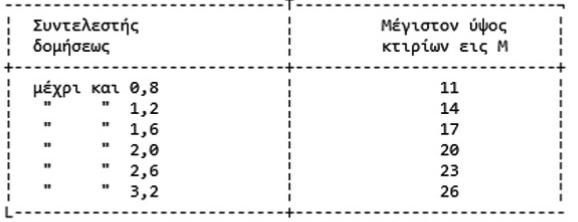
The present article has been structured based on recent concerns raised regarding the issue of tall buildings near the Acropolis Monument. In particular, the article provided an in-depth

analysis of urban development, specifically focusing on the construction of high-rise buildings

and their impact on the urban environment. In addition, it emphasised the need for a balanced approach to urban planning, considering both the benefits and challenges of tall buildings.

Initiating with the historical context, the article shed light on pivotal moments in Greek urban

development, exemplified by the construction of iconic high-rise buildings like the Athens Tower in Ambelokipi region. Having been built in 1971, this 103-meter-tall structure with 28 floors stands as a testament to the early phases of vertical expansion in Greek cities.

Therefore, this historical perspective offers valuable insights into how Greece’s approach to tall buildings has evolved over time, reflecting broader shifts in architectural preferences and

urban planning strategies.

Regarding the legal and regulatory framework, the article provided an in-depth analysis of the laws and policies governing high-rise construction in Greece. It critically examined the effectiveness of these regulations in addressing contemporary urban challenges. This included scrutinizing how these laws have adapted over time to accommodate changing needs and priorities in urban development. In addition, the article underscored the importance of continually revising and updating legal frameworks to ensure they remain relevant and effective in guiding sustainable and balanced urban growth.

The article also looked at global best practices, drawing comparisons with countries like France. While the focus remained primarily on the Greek context, these international examples serve as benchmarks, offering valuable lessons and models that could inform Greece’s urban planning strategies. Furthermore, these comparisons are noted as crucial in understanding how Greece can align its urban development with internationally recognised standards and practices, especially in the realm of high-rise construction, such as local planning and construction strategies.

Overall, the article advocated for a balanced approach to urban planning, while it also emphasised the need for careful consideration of both the advantages and the challenges posed by high-rise buildings. It is true that this balance seemed critical in ensuring that the development of tall structures contributes positively to the urban fabric, enhancing the cityscape while respecting community needs and environmental considerations.

Nonetheless, the article concluded by presenting a comprehensive overview of high-rise building development in Greece, cross-referencing historical developments, legal frameworks, and global best practices. It then called for a nuanced approach to urban planning that harmonises architectural innovation with legal regulations and societal expectations, aiming for sustainable, functional, and aesthetically pleasing urban environments.

“Legislative changes in the field of issuing building permits”, published in Legal Journal Environment and the Law by Nomiki Vivliothiki.

The present article provided an in-depth analysis of the legal and regulatory framework governing the issuance of building permits in Greece, as well as focusing on recent legislative

developments and their impact on the construction sector.

Over the last decade, there have been continuous changes in the provisions on the way building permits are issued and in those of the building regulation. In the same period, there have been significant changes in the legal framework on issues related, for example, to the electronic procedure for issuing building permits or the institution of building inspectors, but also many smaller interventions in an effort to reduce bureaucracy, strengthen enforcement and reduce the time required for the issuance of the permit.

The article provided for key developments and impacts, namely it started with a brief historical review of the Greek State and continued with a list of the most important pieces of

legislation in order to understand the needs for legislation, the general philosophy of the legislative framework for the way of issuing permits and the new needs arising from the evolution of law and modern institutional tools (cadastre, forest maps, electronic databases,

digitisation of plans and diagrams, etc.), as follows:

Transfer of Authority (Law 4030/2011): This law transferred the responsibility of issuing building permits to the Building Services of the Municipalities. It also established independent

Building Inspectors, separate from Building Services, to oversee the correct execution of permits. The law introduced the option for electronic submission of all necessary documents and studies, aiming to streamline the process.

Streamlining Procedures (Law 4495/2017): This law focused on minimizing the time required

for issuing building permits, simplifying procedures, combating corruption, and attracting investors. It mandated an exclusively electronic process for the submission, review, and granting of building permits and approvals. The law also introduced the concept of pre-approval for building permits, either as an optional or mandatory step depending on specific cases.

Creation of Regional Collective Bodies: In order to ease the workload of existing services and

to provide a platform for examining appeals, it was mentioned that regional collective bodies

with distinct responsibilities were established. This development aimed at efficient service provision to citizens and also addressing the backlog of cases in a timely manner.

Challenges and Unmet Goals (Law 4759/2020): Despite the ambitious goals set by Law 4495/2017 and partially by Law 4030/2011, especially regarding the duration of the licensing

process, these objectives were not fully achieved. Ten years after Law 4030/2011, there was

still a search for more effective solutions.


The legislative changes in Greece’s building permit process over the last decade represented

significant efforts to modernise and streamline the system. While laws like 4030/2011 and 4495/2017 introduced crucial reforms such as electronic submission and independent building inspectors, challenges remained in achieving the desired efficiency. The introduction of Law 4759/2020 acknowledged these challenges, indicating a continuous effort to optimize the building permit system in Greece. Nonetheless, the article illustrated that the ongoing legislative evolution highlights the complexity of balancing efficient service delivery with regulatory compliance and corruption prevention in the construction sector.